

Introduction
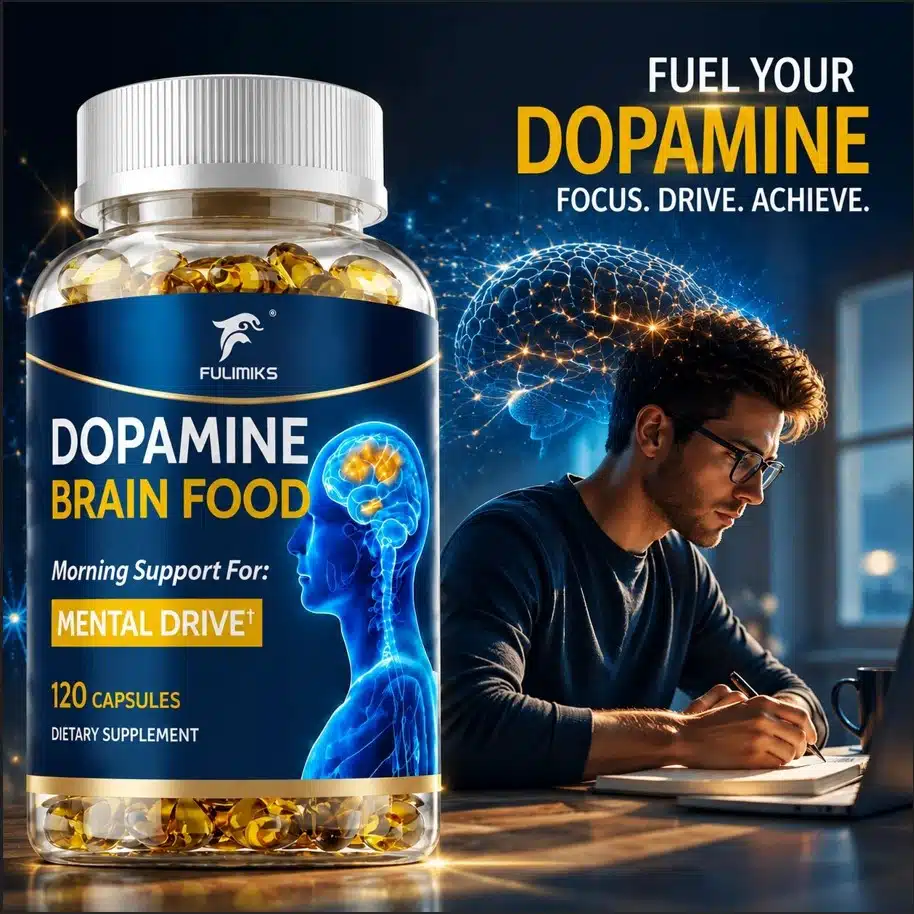
Brain products are everywhere. Many promise sharper focus, steadier mood, and more drive. Few explain how they work.
The Fulimiks Dopamine Brain Food is one of them. It is a low-cost dopamine supplement sold on AliExpress. The listing uses strong phrases like “Mental Drive Support,” “Sharp Focus & Concentration,” and “Positive Mood Support.”
This review looks at what the listing actually tells us. We compare each ingredient with published research. We read the customer feedback. We also point out what is missing, because gaps matter as much as claims.
Before you buy any dopamine supplement, read the label with care. The name on the front does not always match the formula inside. We will show you why that matters here.
This article is for general education only. It is not medical advice. Please talk with a doctor or pharmacist before you start any supplement.

Quick Overview: What Is This Dopamine Supplement?
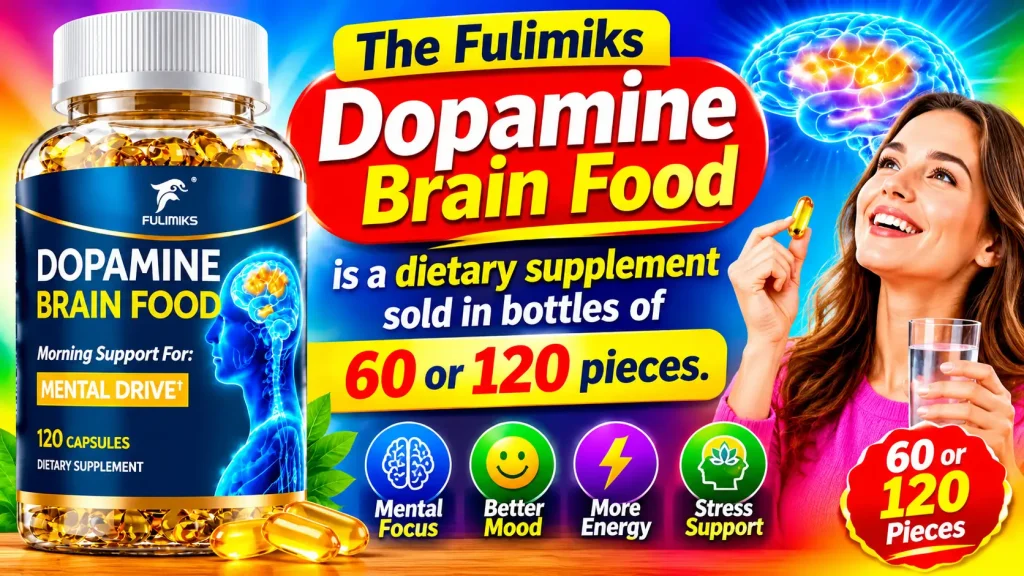
The Fulimiks Dopamine Brain Food is a dietary supplement sold in bottles of 60 or 120 pieces. The brand name is Fulimiks. The listing shows the origin as the US. It is labeled for adults and for both genders.
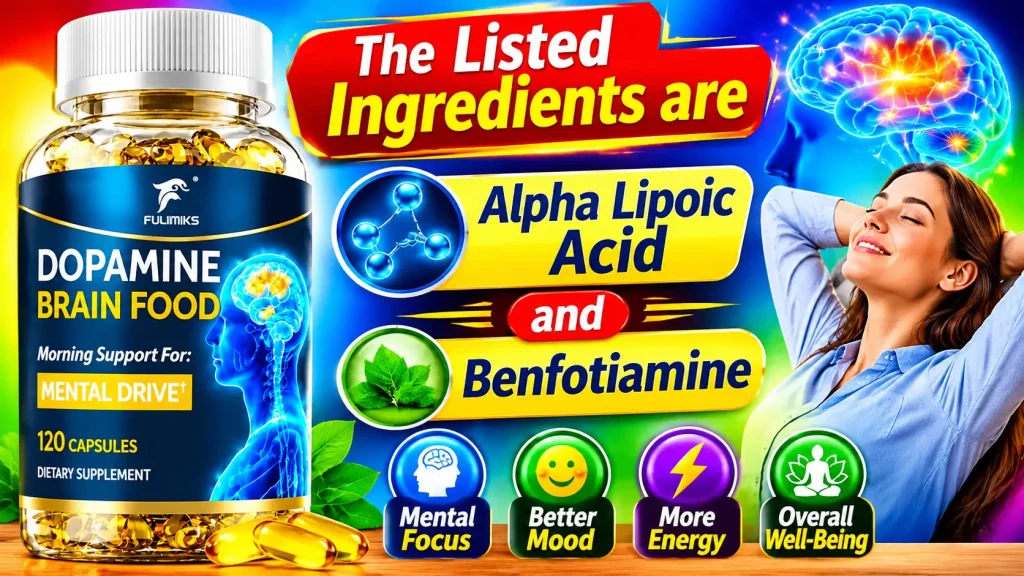
The listed ingredients are Alpha Lipoic Acid and Benfotiamine. That is all the ingredient information the page gives. No amounts are shown.
The marketing points to five areas of support: Dopamine Supplement
- Mental drive
- Sharp focus and concentration
- Positive mood
- Daily mental energy
- Mental clarity and alertness
The price on the page was US $7.81. That was marked as 53% off the original US $16.63. The page also showed an extra 5% off with coins and a US $3.00 coupon on orders of US $15.00. Marketplace prices change often, so check the live page.
The listing shows 79 units sold. The star rating is 4.8 from 11 reviews in one place and 4.7 from 15 ratings in another. The ratings are marked as verified purchases.
Those numbers look good. Still, they say little about whether this dopamine supplement improves your focus or mood. We look at that in detail below.
Watch The Sales Video
Product Specifications Explained in Plain Language
Marketplace listings include many technical fields. Some are useful. Some are not. Here is what each one means if you are comparing a dopamine supplement online.
Ingredients: Alpha Lipoic Acid / Benfotiamine. These are the only two active ingredients named. Both are well-known compounds. We cover each one in its own section.
Product specification: 60/120 pcs. You can buy 60 or 120 pieces. The listing does not say whether they are capsules or tablets. The word “pcs” is generic.
Usage and dosage: 2. The listing shows only the number 2. It probably means two pieces per day, but the page does not say so. It also does not say whether to take them together, split them, or take them with food. Check the bottle label when it arrives.
Packaging: Bottle. This is a standard supplement bottle.
Weight: 0.13. The unit is not shown. It is probably kilograms, which is about 130 grams for a shipped bottle.
Charge unit: bottles. You pay per bottle.
Department name: Adult. The product is not meant for children.
Gender: Unisex. The seller says men and women can use it.
Origin: US (Origin). A country name on a listing is not proof of where a product was made or tested. Look for lot numbers and manufacturer details on the physical package.
High-concerned chemical: none. This is a standard AliExpress field. It means the seller did not declare any chemicals from a regulated concern list. It is not a lab certificate or a purity test.
What Does “Dopamine Brain Food” Actually Mean?
The name raises a fair question. Does this dopamine supplement contain dopamine? Based on the listing, no. The only ingredients named are Alpha Lipoic Acid and Benfotiamine.
Neither of these is dopamine. Neither is a direct building block of dopamine. That is an important point for buyers.
“Dopamine Brain Food” is a marketing name. It suggests a link to the brain’s dopamine system. Supplement brands often use this kind of naming because it sounds scientific. It also sets high expectations.
A more accurate description would be a “metabolic support formula with an antioxidant and a vitamin B1 derivative.” That is less catchy. It is closer to the facts.
This does not make the product bad. Both ingredients have real research behind them. The concern is the gap between the name and the formula. If you buy it expecting a dopamine boost, you may be disappointed.
Be wary of any dopamine supplement that claims to “increase dopamine” directly. Dopamine is a tightly controlled chemical in the brain. No simple pill raises it safely for everyone. Even prescription drugs that act on dopamine need careful medical supervision.
Understanding Dopamine: What It Does in the Brain
Dopamine is a neurotransmitter. That means it carries signals between nerve cells. People often call it the “feel-good chemical,” but that label is too simple.
Dopamine plays a role in several functions: Dopamine Supplement
- Motivation and drive. It helps you start tasks and keep going.
- Reward and learning. It signals that something was worth doing.
- Attention and focus. It helps you filter out distractions.
- Movement. Low dopamine in certain brain areas affects motor control, as seen in Parkinson’s disease.
- Mood regulation. It works alongside serotonin and other brain chemicals.
Your body makes dopamine from the amino acid tyrosine. Tyrosine comes from protein-rich food. The body converts it to L-DOPA, then to dopamine. This process needs helper nutrients such as iron, vitamin B6, and folate.
Dopamine does not work alone. Focus, mood, and motivation depend on many systems. Sleep, stress hormones, blood sugar, inflammation, and other neurotransmitters all play a part.
That is why “boost your dopamine” is an oversimplified claim. Too little dopamine activity can cause problems. Too much can too. Balance matters more than “more.” It is also why a dopamine supplement sold as a quick fix deserves caution.
Can a Dopamine Supplement Raise Dopamine? What Science Says
Dopamine itself cannot be swallowed to raise brain dopamine. It does not cross the blood-brain barrier well. That barrier is a protective filter around the brain.
Some products work on precursors instead. L-tyrosine is one example. Mucuna pruriens, a plant that contains L-DOPA, is another. A dopamine supplement built on these ingredients has a more direct link to the dopamine pathway. Even so, they carry risks and interactions, and the evidence in healthy people is mixed.
The Fulimiks formula, as listed, does not include these. It lists Alpha Lipoic Acid and Benfotiamine only.
So any benefit would likely come from indirect routes. These could include supporting energy metabolism in nerve cells, reducing oxidative stress, or correcting a mild nutrient shortfall. These routes are plausible. They are not proven for healthy adults who want better focus.
In short, there is no strong evidence that this dopamine supplement raises dopamine in a healthy person. The listing does not claim to treat any condition. It uses softer words such as “support.”
Those words are legally careful, but they can still mislead. A reader may assume a feeling of focus will follow. Research does not guarantee that.
Ingredient Breakdown: Alpha Lipoic Acid (ALA)
Alpha lipoic acid is the first of the two ingredients in this dopamine supplement. The body makes it in small amounts. It is also found in foods such as spinach, broccoli, and organ meats. Food amounts are small compared with supplement amounts.
ALA plays two main roles: Dopamine Supplement
First, it helps energy production. It is a cofactor for enzymes inside mitochondria, the tiny power plants in your cells. These enzymes help turn glucose into usable energy.
Second, it acts as an antioxidant. It can neutralize certain free radicals. It is unusual because it works in both water and fat environments. It may also help recycle other antioxidants, such as vitamin C and vitamin E.
What research shows. The strongest evidence for ALA is in diabetic neuropathy. This is nerve pain and damage linked to high blood sugar. Studies have used about 600 mg daily, and some benefit has been reported for symptoms. Evidence for better focus or mood in healthy people is limited.
Some small studies have looked at ALA in people with memory problems. Results were interesting but early. They involved specific patient groups. They do not show the same results for healthy adults.
Common dose range. Supplements often provide 100 to 600 mg. The Fulimiks listing does not state the amount per serving. That is a significant gap.
Forms. ALA comes as R-ALA, S-ALA, or a mix. The listing does not say which form is used.
Safety notes. ALA can lower blood sugar. People with diabetes, or those taking glucose-lowering drugs, should speak to a doctor first. Rare reports link ALA to insulin autoimmune syndrome. Mild side effects include nausea, stomach upset, and skin rash.
Ingredient Breakdown: Benfotiamine
Benfotiamine is the second ingredient in this dopamine supplement. It is a lab-made, fat-soluble form of thiamine, also known as vitamin B1. Regular thiamine dissolves in water. Benfotiamine dissolves in fat, which helps it absorb well in the gut. Blood levels of thiamine rise higher after benfotiamine than after the same dose of standard thiamine.
Why thiamine matters for the brain. The brain uses a lot of glucose. Thiamine is needed to turn glucose into energy. Severe thiamine deficiency can cause serious brain problems, such as Wernicke encephalopathy. This is seen mostly in heavy alcohol use or severe malnutrition.
What research shows. Benfotiamine has been studied in diabetic neuropathy. Trials used about 300 to 600 mg per day. Some showed symptom improvement over several weeks. Quality and size varied.
A small pilot study in people with mild Alzheimer’s disease also tested benfotiamine. It suggested a possible slowing of decline. The study was small and exploratory. It is not proof, and it does not apply directly to healthy people.
There is no strong evidence that benfotiamine improves focus or mood in people with normal thiamine levels. If you already get enough B1 from food, extra may add little.
Safety notes. Benfotiamine is generally well tolerated. Reported side effects include mild stomach upset and, rarely, skin reactions. Dose matters, and again, the listing does not state it.
How ALA and Benfotiamine May Work Together
Both ingredients support glucose metabolism. They act at different points in the same energy pathways. ALA helps mitochondrial enzymes. Benfotiamine supplies a form of vitamin B1 that those enzymes also need.
Thiamine, in its active form, is a cofactor for pyruvate dehydrogenase. ALA is part of that same enzyme complex. So the pairing is not random. There is a logical link.
The combination is also common in nerve-health formulas. Many products pair them for neuropathy support. The Fulimiks product applies a similar pairing to a “brain food” angle.
Here is a fair way to see it. The formula may support basic cell energy and reduce oxidative stress. Those are background tasks. They do not create alertness the way caffeine does.
If you already eat well and have stable blood sugar, you may notice little from this dopamine supplement. If your diet is poor or you have a mild deficiency, you may notice more. We cannot predict this for any single person.
No published study tests this exact product. We also found no clinical trial of the combination in healthy adults for focus or mood. That is the honest state of the evidence.
What Is Missing From the Listing
A good dopamine supplement page shares clear details. This listing leaves out several things you would want to know.
Amount per serving. The page does not show milligrams of ALA or benfotiamine. Without this, you cannot compare it to studied doses. Benefits seen in research depend on dose.
Serving size. The “2” under usage is unclear. It may mean two pieces a day. It may not.
Other ingredients. Capsule shells, fillers, binders, and flow agents are not listed. These matter for people with allergies or dietary limits, such as vegan or gluten-free needs.
Form of the product. We do not know if it is a capsule, tablet, or softgel.
Manufacturer details. The brand is Fulimiks, but no facility, certification, or testing information appears. Look for GMP certification, third-party lab tests, or batch numbers.
Directions and warnings. The listing shows a general disclaimer only. It gives no product-specific warnings.
Expiry and storage details. These should appear on the physical bottle.
The seller does include a legal disclaimer. It says dietary supplements are not medicines. It states that AliExpress is not the manufacturer or seller. It tells buyers to read labels and not rely only on the listing. That advice is sound. Take it seriously.
Claimed Benefits Versus the Evidence
Let’s review each claim this dopamine supplement makes and compare it with what research supports.
Mental drive support. Drive and motivation involve dopamine circuits. But the listed ingredients are not known dopamine boosters. Evidence for a direct effect on motivation is lacking.
Sharp focus and concentration. No strong trial shows ALA or benfotiamine improves focus in healthy adults. If a deficiency exists, correcting it may help concentration. That is different from a performance boost.
Positive mood support. Mood depends on many factors. Some studies link low B-vitamin status to low mood. Evidence for ALA and benfotiamine improving mood in healthy people is weak.
Boost daily mental energy. Both ingredients support cell energy pathways. This is biologically sensible. A noticeable “energy boost” is not guaranteed. These ingredients are not stimulants.
Mental clarity and alertness. Clarity is subjective. Better sleep, hydration, and stable blood sugar often matter more. Any effect from this product would likely be subtle at best.
Overall, the claims are broad and the evidence is thin. The ingredients are legitimate. The leap from “supports metabolism” to “sharper focus and positive mood” is not well supported by direct research.
A fair summary is this. The formula is plausible as general nutritional support. It is not proven as a focus or mood product.
Usage and Dosage: What We Know and Do Not Know
The listing says only “2” under usage and dosage. That is very little.
The most likely reading is two pieces per day. But do not assume. Use the directions printed on the bottle you receive. If they are missing, contact the seller before you take any.
A few general rules apply when you use a dopamine supplement or any similar product.
Do not exceed the stated dose. The seller’s disclaimer says the same. More is not better. With ALA, higher doses can lower blood sugar and upset the stomach.
Take it with food if you feel nauseous. Some people tolerate ALA better with meals. Others take it on an empty stomach for absorption. The label should guide you.
Start with one trial bottle. The listing offers a 60-piece trial option. This is a sensible way to test tolerance without a large spend.
Be consistent. Nutrients like B1 build up over days or weeks. One night tells you almost nothing. One reviewer on the listing said the same thing.
Keep a simple record. Write down your sleep, caffeine, mood, and focus each day. This helps you judge fairly.
Store it properly. Keep the bottle in a cool, dry place. Keep it away from young children.
If you take other medicines, ask a pharmacist about interactions before you start.
Price and Value Analysis
Is this dopamine supplement a good deal? Start with the numbers. At the time of the listing, the base price was US $7.81, down from US $16.63. A 53% discount is large. Marketplace “original prices” are often inflated, so treat the discount with caution. The real price is what you pay, not the crossed-out figure.
Let’s do simple math. If the 60-piece bottle costs about $7.81, that is roughly $0.13 per piece. If the dose is two per day, a bottle lasts 30 days. That is about $0.26 per day.
This is cheap. Many supplements with ALA and benfotiamine cost more. But a low price does not guarantee quality or accurate dosing. With no amounts listed, you cannot calculate cost per milligram. That is the real measure of value.
For comparison, you can buy plain benfotiamine and plain ALA separately from well-known brands. Those labels show exact amounts and often carry third-party testing. They may cost more per bottle. They also tell you what you are getting. Other dopamine supplement options with clearer labels may offer better value even at a higher price.
Other price details on the listing include a US $3.00 discount on US $15.00 orders and an extra 5% off with coins. Tax may be added at checkout. Shipping costs and times vary by region.
Value is not only about price. It is about transparency, safety, and likely benefit. On price alone, the product looks affordable. On transparency, it falls short.
Customer Reviews: What Buyers Are Saying
The listing shows a rating near 4.7 to 4.8. All ratings are marked as verified purchases. That is encouraging. But the sample is small, and most entries contain little text. Reviews of this dopamine supplement are mostly about the buying experience, not long-term results.
Here is what the visible feedback says: Dopamine Supplement
Shipping and packaging. One reviewer said it “came very fast” and was “well packed.” Another said it arrived in good time. These comments suggest the order process went smoothly.
Early effects. One reviewer said they could not tell the effect after one night. They said only time would tell. This is a realistic view. It neither praises nor criticizes the product.
A calming and focusing effect. One longer review said the product “produces a calming and focusing effect.” That reviewer also made points about dosage and mental health conditions. We address those in the next section.
Star-only ratings. Several reviews give five stars with no written comment. These tell us the buyer was satisfied. They do not tell us why.
Package choices. Reviews mention the 60-piece trial box and the 120-piece three-box option. Buyers seem to pick both sizes.
Helpful votes. A few comments got a small number of “helpful” votes. The numbers are low.
What the reviews do not show. There are no long-term reports. There are no detailed accounts of focus tests, work output, or mood changes. There are no complaints in the visible text, but a small sample can hide problems.
Many marketplace reviews focus on delivery. That is useful for judging the seller. It does not prove the supplement works. Treat these ratings as a sign of a smooth purchase, not proof of results.
Fact-Checking One Reviewer’s Comments
One review deserves a closer look. It made several claims that readers might take as advice.
The reviewer said the product creates a calming and focusing effect. That is their personal experience. It is valid as a personal report. Individual responses vary, and placebo effects are real in supplement use.
The reviewer then said you must know how much dopamine your brain normally produces. This is not accurate for practical use. No routine home or clinic test measures brain dopamine levels in everyday life. Blood or urine dopamine does not reflect brain levels well. Also, this dopamine supplement lists no dopamine at all.
The reviewer said you cannot exceed the proper dose. This part is sound. You should follow the label and avoid taking extra.
The reviewer also said people with bipolar disorder or schizophrenia should not take it, because it could become erratic. This is a cautious statement. We cannot confirm that this product would cause problems. But the general principle is wise. People with conditions linked to dopamine regulation should not self-start products marketed for mood or drive. They should ask their psychiatrist or doctor first.
We want to be fair. The reviewer was trying to be careful, and the caution is reasonable. But some of the wording could confuse readers. A formula with ALA and benfotiamine does not provide dopamine. The better message is simple. If you have a mental health condition, talk to your healthcare provider before using any brain or mood supplement.
Packaging, Shipping, and Seller Transparency
Packaging on the listing is a standard bottle. Reviewers called it well packed. That is a good sign for shipping care.
At least one buyer described delivery as fast. Others said the item arrived in good time. Shipping depends on your location and the seller’s warehouse. Do not assume the same speed.
Seller transparency is more limited. We do not see a detailed manufacturer profile on the listing. We do not see certificates or lab reports.
Buying a dopamine supplement from an online marketplace carries more uncertainty than buying from a pharmacy. Products can vary between batches and sellers. That is not unique to this brand. It is a general risk worth knowing.
Here is a checklist for when your bottle arrives: Dopamine Supplement
- Check the seal. The bottle should have an intact safety seal.
- Read the full label. Look for the supplement facts panel, serving size, amounts, and other ingredients.
- Look for a lot number and expiry date. These are essential for safety and recalls.
- Check for a manufacturer or distributor name. A real address or contact point is a good sign.
- Compare it with the listing. The name, count, and ingredients should match.
- Note any odd smell, color, or damage. If anything looks wrong, do not use it.
If the label shows no amounts or has no usable information, contact the seller or request a refund through the platform’s buyer protection. Keep photos of the packaging.
Safety, Side Effects, and Interactions
Is this dopamine supplement safe? Both ingredients are generally considered safe for most adults at typical doses. Safety still depends on the amount, your health, and your medicines.
Possible side effects of ALA include: Dopamine Supplement
- Nausea or stomach discomfort
- Skin rash or itching
- Headache
- Low blood sugar, especially in people using diabetes medicine
Possible side effects of benfotiamine include: Dopamine Supplement
- Mild digestive upset
- Occasional skin reactions
- Rarely, changes in body odor, reported anecdotally
Possible interactions to discuss with a professional: Dopamine Supplement
- Diabetes medicines and insulin. ALA may lower blood glucose further.
- Thyroid medicines. Some sources suggest ALA may influence thyroid hormone levels. If you have a thyroid condition, ask your doctor.
- Chemotherapy. Antioxidants may interact with some cancer treatments. Always ask your oncology team.
- Other supplements. Taking several products with overlapping ingredients may push your total intake too high.
Special groups. Pregnant and breastfeeding people should get medical advice first. Children should not take it, since the listing is for adults. People with liver or kidney problems should ask a doctor.
Mental health conditions. If you have bipolar disorder, schizophrenia, severe anxiety, or take psychiatric medicine, speak to your prescriber before starting anything that claims to affect mood or drive.
When to stop. Stop use and seek help if you have a rash, swelling, trouble breathing, severe stomach pain, dizziness, shaking, sweating, or signs of low blood sugar.
Who Might Consider This Supplement
This product is not for everyone. A few groups may reasonably consider it, after talking with a healthcare professional.
Adults curious about general nutritional support. If you want a simple formula with an antioxidant and a B1 form, this fits. A dopamine supplement like this one should be judged with modest expectations.
People with a possible mild B1 shortfall. Diets low in whole grains, legumes, and meat can be low in thiamine. Heavy alcohol use and some digestive disorders also raise risk. A doctor can check this.
People whose clinician has suggested ALA or benfotiamine. For example, in the context of nerve health. In that case, use clinically studied doses from a product with a clear label.
Buyers who want a low-cost trial. The 60-piece option allows a small test. Still, a clearly labeled product may be a better test.
The product may be a poor fit for those who want a stimulant-like lift. It will likely not work like caffeine. It also may not suit people hoping to treat ADHD, depression, or low motivation. Those conditions need proper evaluation and treatment.
Who Should Avoid It or Ask a Doctor First
Anyone considering a dopamine supplement should check their health situation first. Some people need extra care.
- People with diabetes or blood sugar problems. ALA can change glucose levels.
- People with thyroid disorders. Ask about possible effects.
- Pregnant or breastfeeding individuals. Safety data for this specific product is lacking.
- People with bipolar disorder, schizophrenia, or other psychiatric conditions. Products marketed for dopamine or mood may not be right for you. Always check with your prescriber.
- People taking prescription medicines. Interactions are possible.
- People with allergies. The full ingredient list is not shown, so allergens cannot be confirmed.
- Anyone under 18. The listing is for adults.
- People with liver or kidney disease.
- Those facing surgery. Tell your surgeon about all supplements, since some affect blood sugar.
If you have ongoing trouble with focus, mood, or motivation, see a healthcare professional. These symptoms can come from sleep problems, thyroid issues, anemia, depression, anxiety, ADHD, or stress. A supplement will not fix an unaddressed cause.
How to Test Any Dopamine Supplement Fairly
It is easy to fool yourself with supplements. Expectation shapes experience. Use these steps with any dopamine supplement to test it fairly.
Step 1: Set a baseline. For one week before starting, rate your focus, mood, and energy each day from 1 to 10. Note sleep hours and caffeine.
Step 2: Change one thing. Do not start new habits at the same time. If you begin a supplement and a new workout plan together, you cannot tell which one helped.
Step 3: Use it consistently. Follow the label for four to eight weeks. Nutrient-based products take time.
Step 4: Keep tracking. Continue the daily ratings. Look at weekly averages rather than single days.
Step 5: Watch for side effects. Note stomach upset, headaches, or mood changes.
Step 6: Try a pause. After a few weeks, stop for one to two weeks and compare. If nothing changes, the product may not be doing much.
Step 7: Consider a blind test. Ask someone to prepare either the product or a placebo without telling you. This is hard but reduces bias.
Step 8: Share results with your doctor. They can interpret changes and check for underlying problems.
This approach helps you spend money wisely. It also protects you from relying on a product that is not helping.
Natural Ways to Support Focus Beyond a Dopamine Supplement
A dopamine supplement plays a small part at best. Daily habits usually matter more. Here are well-supported ways to support brain function.
Sleep. Aim for seven to nine hours. Poor sleep reduces attention, mood, and motivation. It also disrupts dopamine signaling.
Protein-rich food. Foods like eggs, fish, poultry, dairy, beans, and nuts provide tyrosine and other amino acids. Your body uses these to make neurotransmitters.
B vitamins from food. Whole grains, legumes, seeds, pork, and leafy greens supply B1, B6, and folate.
Steady blood sugar. Balanced meals with protein, fiber, and healthy fats help avoid energy crashes.
Exercise. Regular movement supports dopamine and other brain chemicals. Even a daily walk helps.
Sunlight and routine. Morning light supports body-clock regulation, which affects mood and alertness.
Stress management. Chronic stress disrupts focus. Breathing exercises, time in nature, and social contact can help.
Limit constant stimulation. Endless scrolling and rapid-reward apps can leave you less able to enjoy slower tasks. Short breaks from screens may help focus.
Goal setting. Break large tasks into small steps. Finishing each step gives a natural reward.
Hydration and moderate caffeine. Mild dehydration can hurt concentration. Caffeine helps many people, but too much harms sleep.
These steps cost little and carry few risks. They also work alongside any supplement you choose.
Pros and Cons of This Dopamine Supplement
Here is a balanced summary of the Fulimiks dopamine supplement.
Pros: Dopamine Supplement
- Two recognized ingredients. ALA and benfotiamine both have published research.
- Logical pairing. The two work in related energy pathways.
- Low price. The cost per bottle is small.
- Trial size available. The 60-piece option lowers the risk of a bigger purchase.
- Positive early feedback on delivery. Reviewers mention fast shipping and good packing.
- No stimulant listed. People sensitive to caffeine may prefer that.
- Unisex, adult formula. Simple and clear target group.
Cons: Dopamine Supplement
- No amounts per serving listed. This is the biggest gap.
- Name may mislead. The product does not contain dopamine.
- Limited evidence for the marketed benefits. Focus and mood claims are not well supported for healthy people.
- Unclear dosing instructions. The listing shows only “2.”
- Small and thin review base. Many reviews have no text.
- No visible third-party testing. No certificates are shown.
- Other ingredients are not shown. Allergen risk is unclear.
- Possible interactions. ALA affects blood sugar.
- Marketplace risk. Quality can vary between sellers and batches.
What to Look for in a Better-Labeled Dopamine Supplement
If you decide the Fulimiks listing is too vague, here is what to look for elsewhere. When you shop for any dopamine supplement, use this as a checklist.
Clear dose per serving. Look for the milligrams of each ingredient. Compare them to doses used in studies.
Specified form of ALA. R-ALA is often considered more biologically active, though both forms are sold. A label should say which one it is.
Third-party testing. Seals from groups such as USP, NSF, or ConsumerLab show independent checks. Not every good product has one, but it is a useful signal.
Full ingredient list. This should include capsule material and fillers.
GMP manufacturing. Good Manufacturing Practice means the facility follows quality standards.
Batch number and expiry. Both should be printed on the package.
Realistic claims. Avoid labels that promise to cure, treat, or fix a condition. Be cautious of phrases like “boosts dopamine instantly.”
Reputable seller. Buy from a pharmacy, a known retailer, or a brand’s official store when possible.
Simplicity. More ingredients are not always better. Long proprietary blends hide amounts.
You can also ask a pharmacist for a trusted option. They can advise on interactions with your medicines.
Final Verdict: Is This Dopamine Supplement Worth Trying?
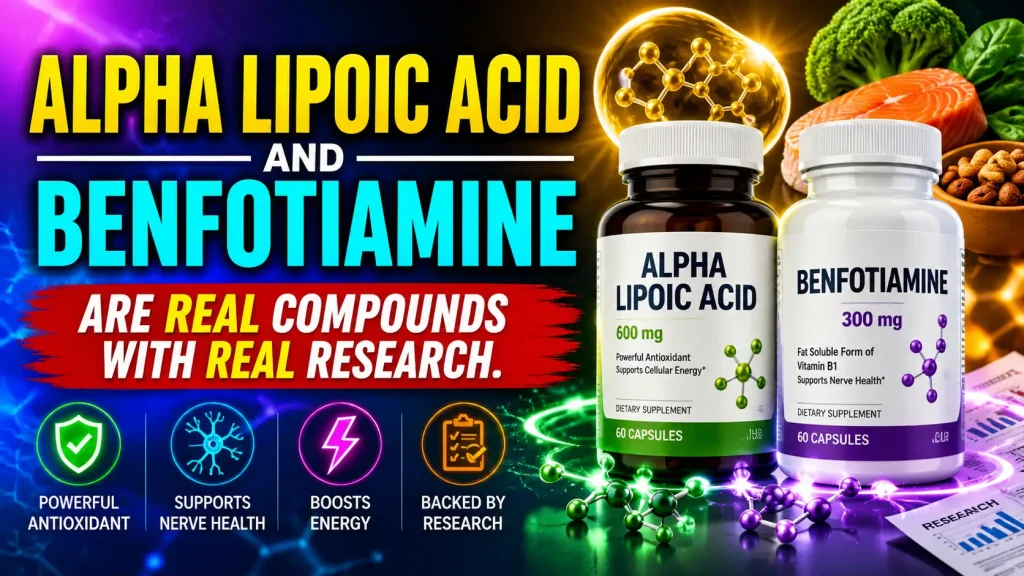
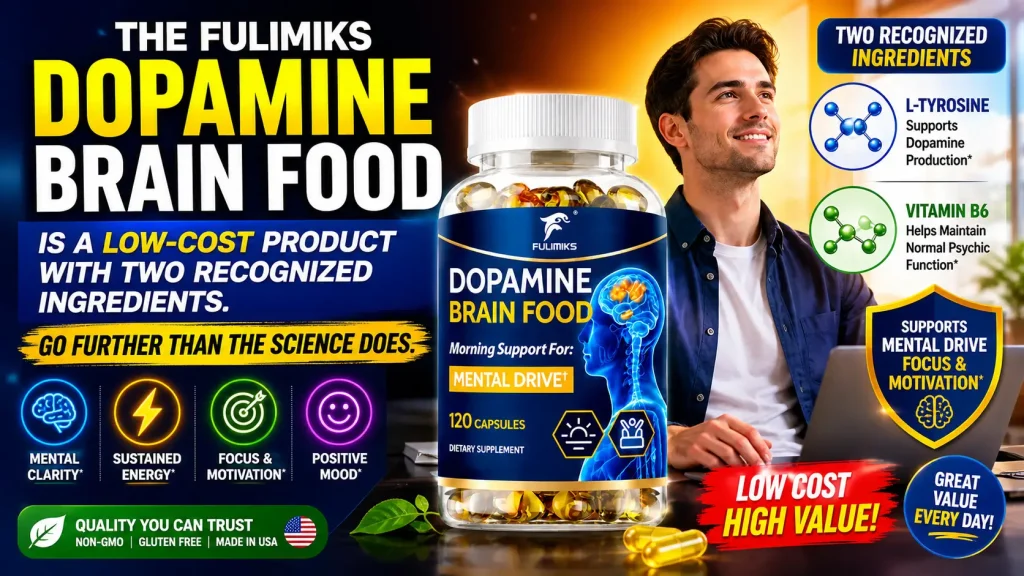
The Fulimiks Dopamine Brain Food is a low-cost product with two recognized ingredients. Alpha lipoic acid and benfotiamine are real compounds with real research. The evidence, however, centers on nerve health and metabolic conditions. It does not center on focus or mood in healthy adults.
The name is the main issue. “Dopamine Brain Food” suggests something the formula does not clearly deliver. This dopamine supplement does not list dopamine or its precursors. Marketing phrases such as “mental drive” and “positive mood support” go further than the science does.
The listing also lacks key details. We do not know the dose per serving, the form of ALA, the other ingredients, or the testing standards. Without those, it is hard to judge quality or compare it with other products.
Customer feedback is positive but thin. Buyers praise shipping and packing. One reported a calming, focusing effect. Another said it was too early to tell. None of this proves the product works. It shows the purchase went well for most.
Our rating approach. For transparency, we would call it “acceptable for cautious trial, not a proven focus aid.” Value for money looks good on price. Transparency is weak. Evidence for the marketed claims is limited.
Our practical advice: Dopamine Supplement
- Do not expect a dopamine boost from this dopamine supplement.
- Read the bottle label on arrival.
- Start with the small trial size if you choose to buy.
- Do not exceed the dose.
- Check with a doctor if you have diabetes, thyroid issues, mental health conditions, or take medicine.
- Track your results for a few weeks.
- Put sleep, food, movement, and stress care first.
If your goal is better focus and drive, the best “brain food” is still a steady routine. Good sleep, balanced meals, exercise, and daylight do more than most pills. A dopamine supplement can be an extra, but it should never replace those basics or professional care.
Frequently Asked Questions
Is this a real dopamine supplement?
It is sold as one, but the formula does not contain dopamine. The listing names Alpha Lipoic Acid and Benfotiamine only. Think of it as a metabolic support product with a dopamine-themed name.
Does a dopamine supplement actually raise dopamine levels?
There is no strong evidence that this combination raises dopamine in healthy people. Any effect would likely be indirect and small.
How many should I take per day?
The listing shows only “2” under usage and dosage. That probably means two pieces daily, but check the bottle label. Do not exceed the recommended amount.
How long does it take to work?
Nutrient-based products often need weeks. One reviewer noted that one night is not enough to judge. Track your results for four to eight weeks if you try it.
Is it safe to take with coffee?
The listing mentions no known problem. Still, caffeine can add to jitteriness or stomach upset for some people. Watch how you feel.
Can I take it with diabetes medicine?
Speak to your doctor first. ALA can lower blood sugar.
Is a dopamine supplement safe for people with bipolar disorder or schizophrenia?
Do not self-start. Ask your psychiatrist or doctor. A reviewer on the listing raised the same caution, and it is wise.
Is it suitable for vegans?
The listing does not provide enough information. Capsule shells and fillers are not listed. Check the label or ask the seller.
Is it approved by the FDA?
Dietary supplements in the United States are not approved by the FDA before sale. The listing does not claim approval. The seller’s own disclaimer says supplements are not medicines.
Does “Origin: US” guarantee quality?
No. It is a listing field. It does not prove testing or manufacturing standards.
Is the 120-piece option better value?
It may lower the cost per piece. But if you have not tried the product, start with the smaller bottle to test tolerance.
Can a dopamine supplement treat ADHD or depression?
No. This product is not a treatment for any condition. If you have symptoms, see a healthcare professional.
Important Disclaimer: Dopamine Supplement
This article is for general information and education only. It is an independent review based on the public listing details and published research. It is not medical advice and does not diagnose, treat, cure, or prevent any disease. We have not tested this product in a lab. Product details, prices, and reviews may change. Dietary supplements are not medicines. Always read the label and directions on the product you receive. Keep supplements out of reach of young children. Speak with a qualified healthcare professional before starting any dopamine supplement, especially if you are pregnant, breastfeeding, have a medical condition, or take prescription medicine.
